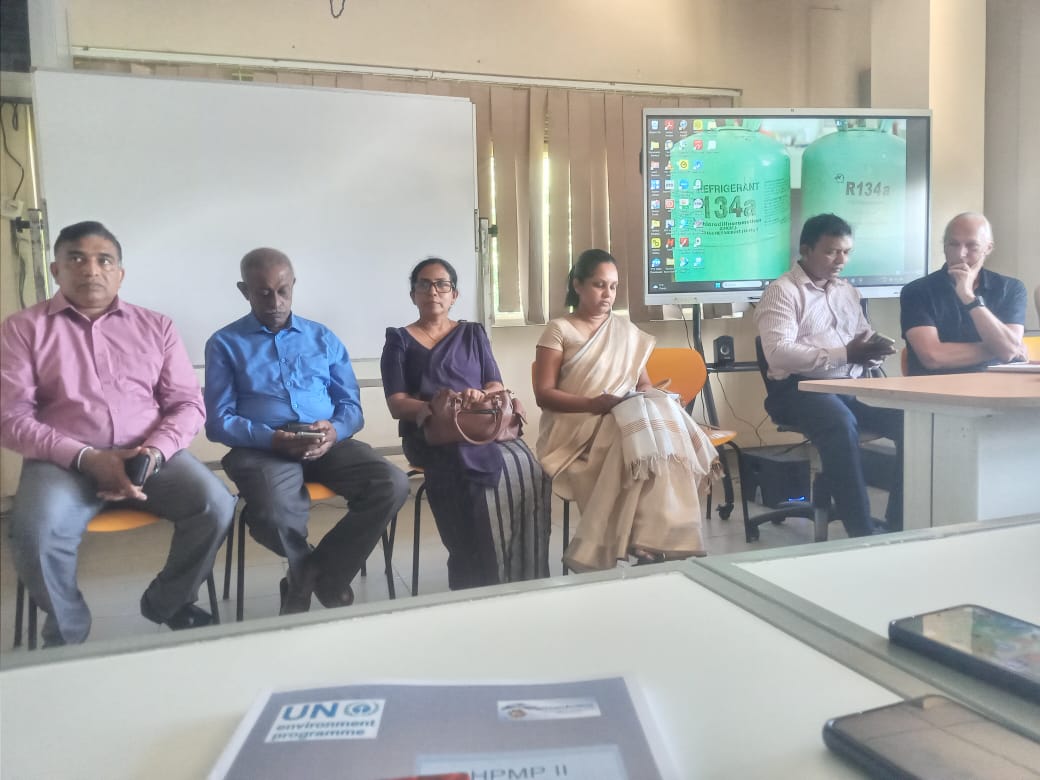
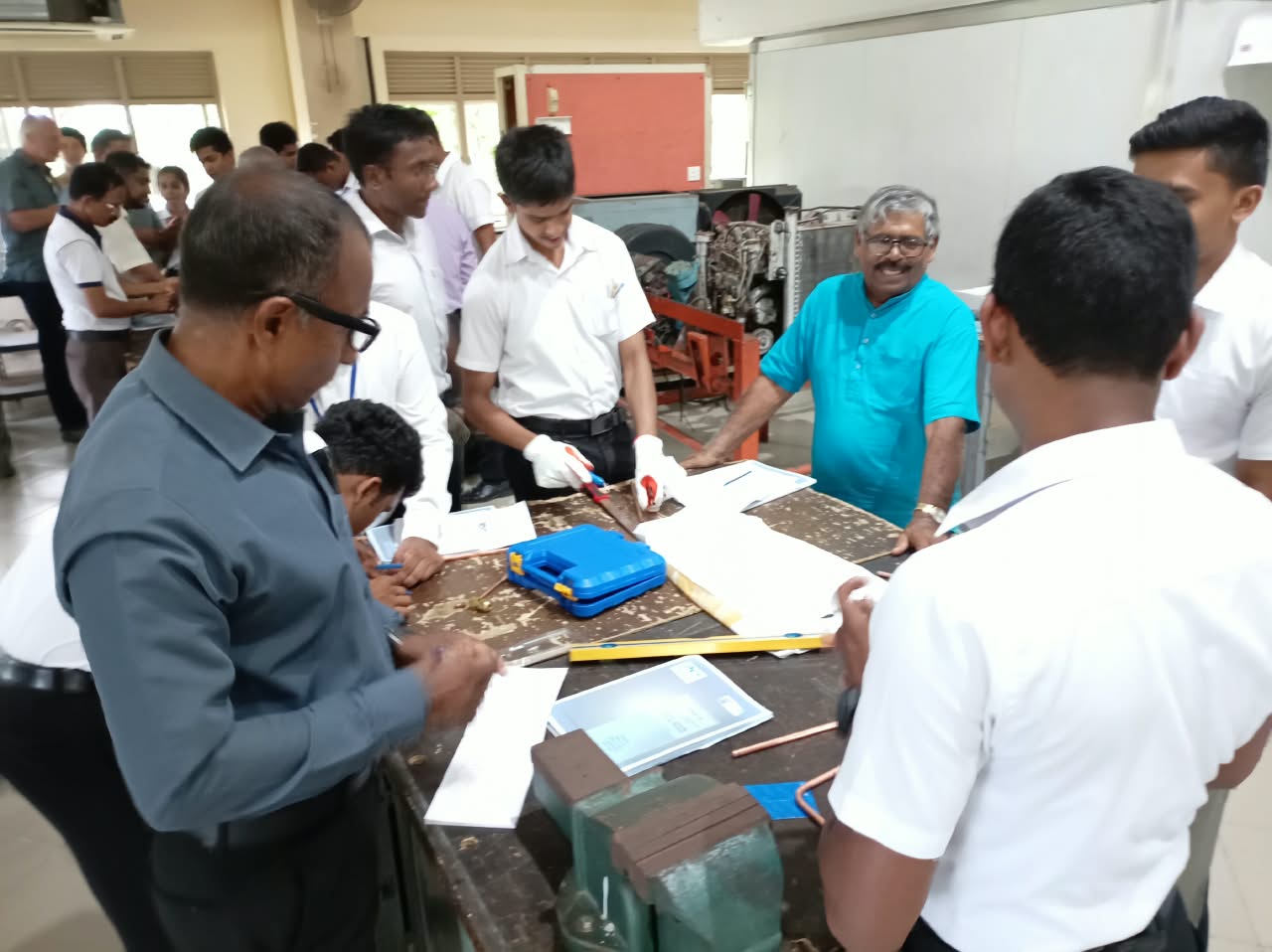
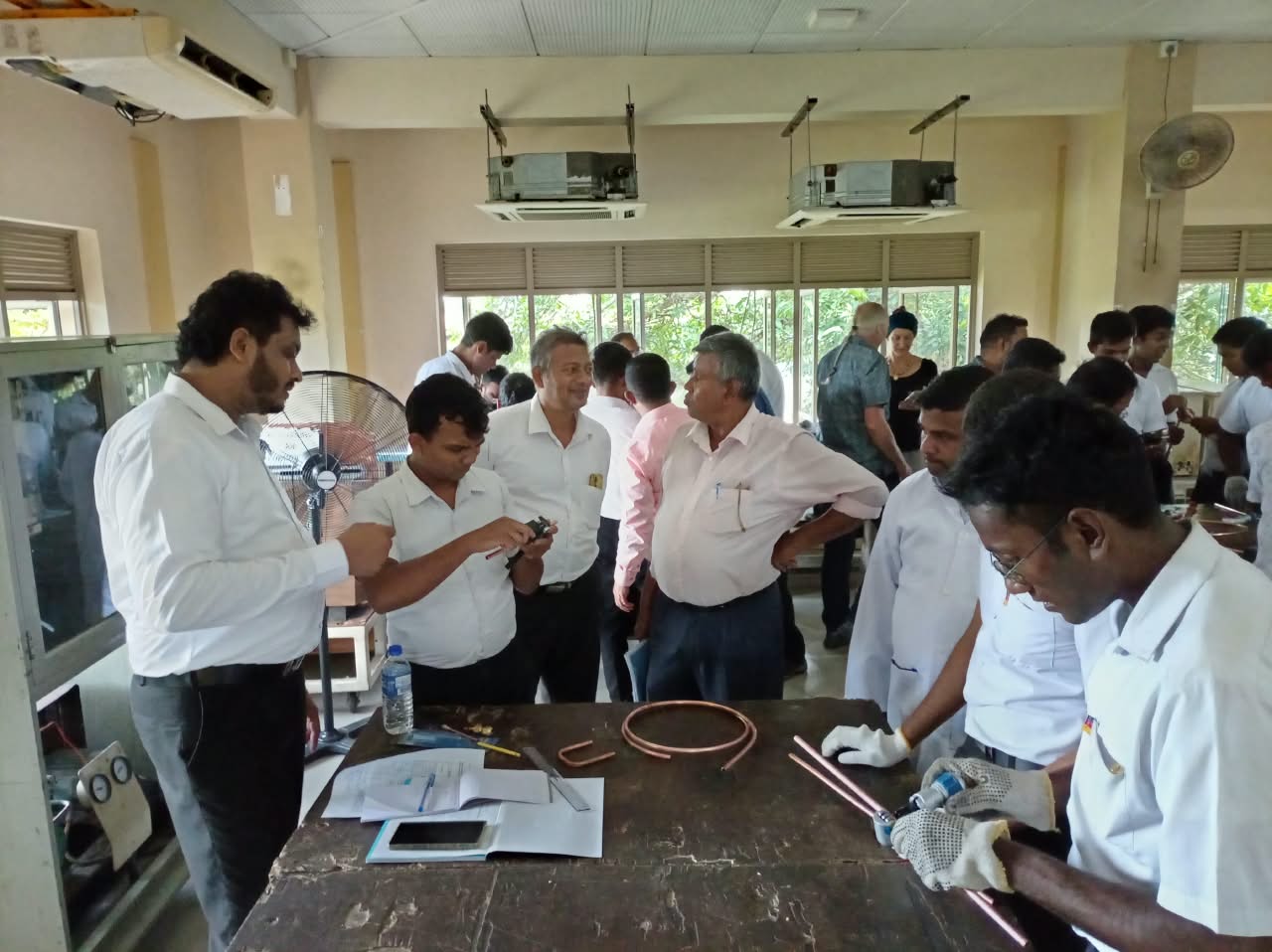
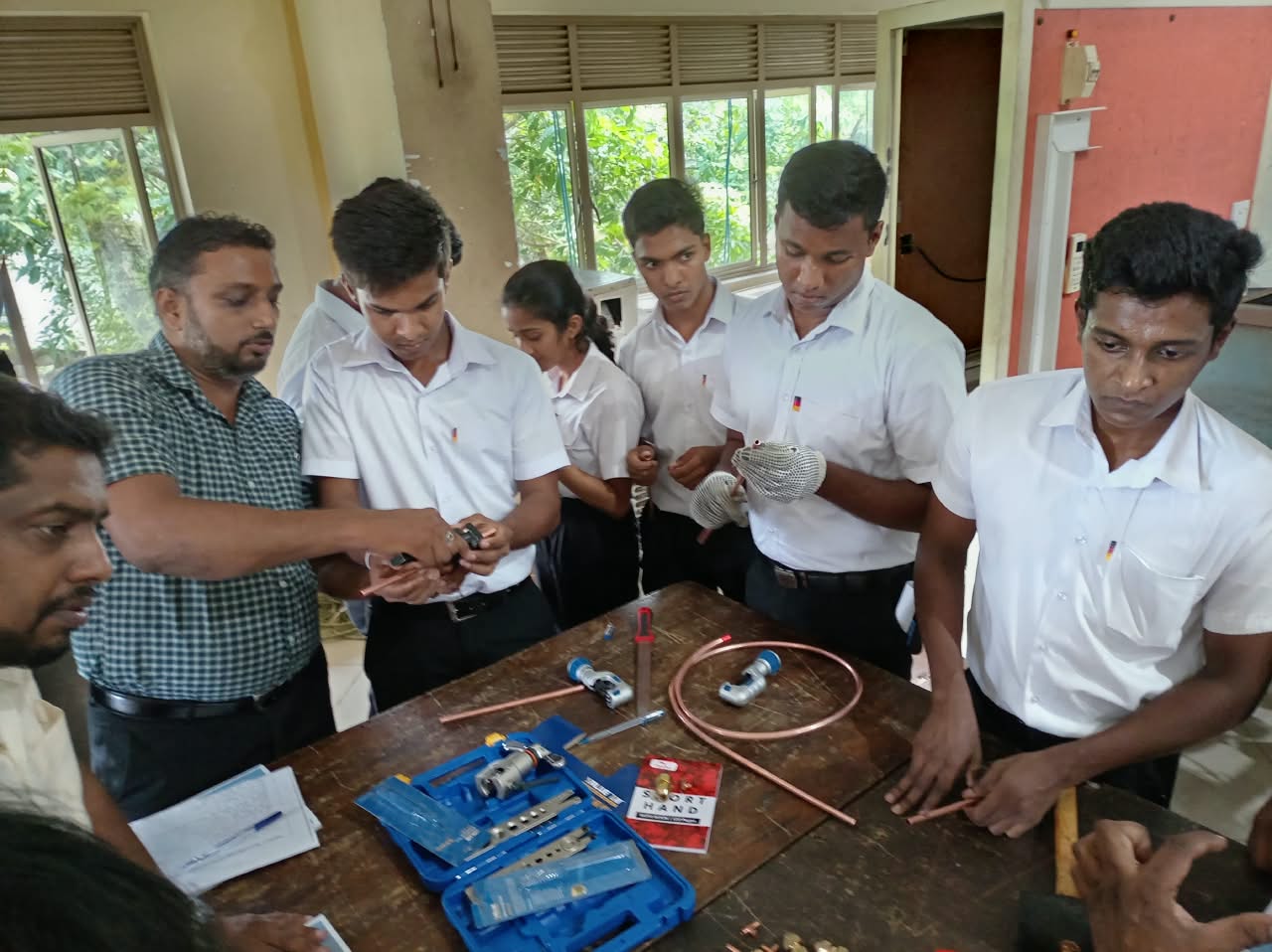
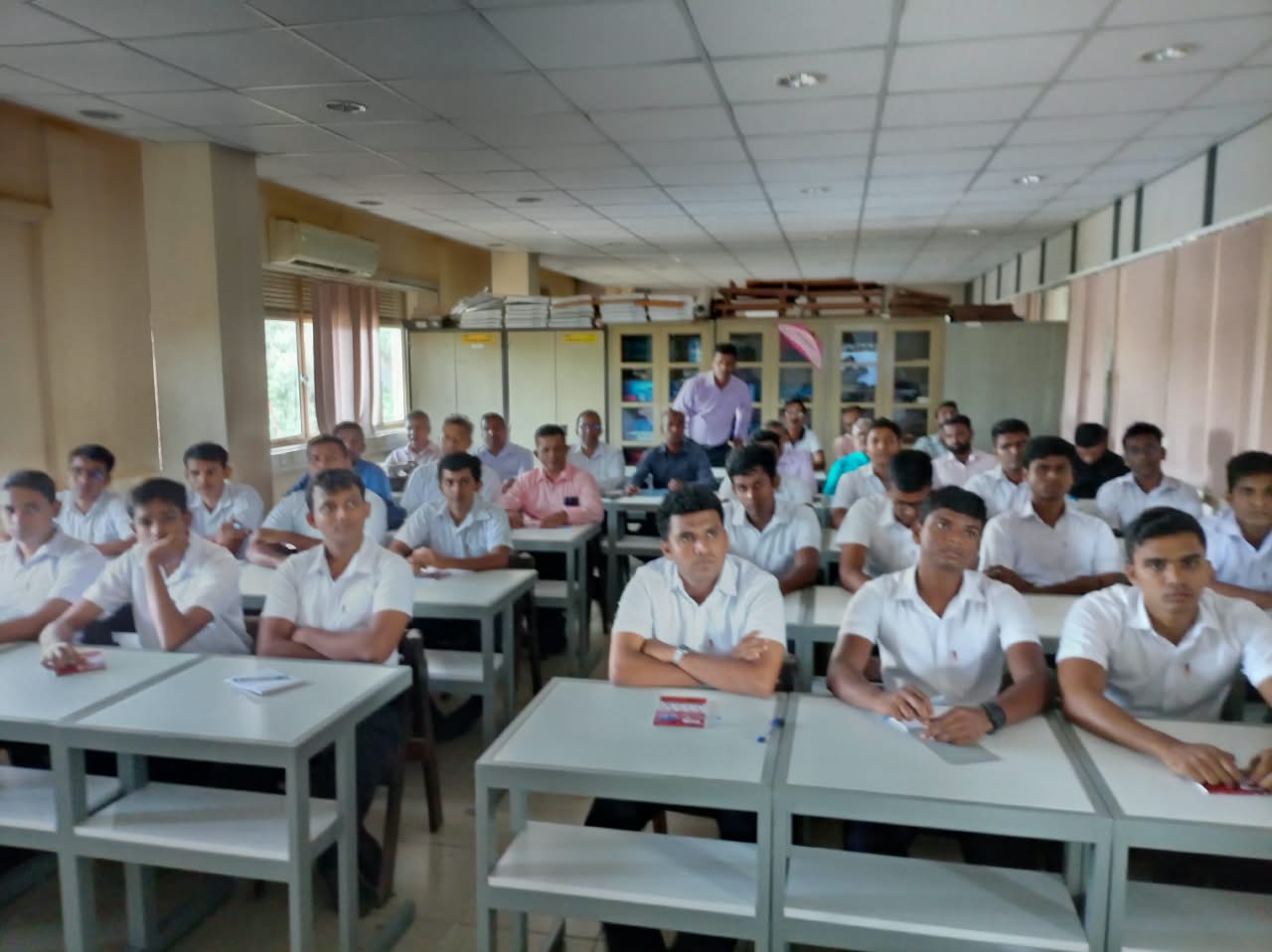
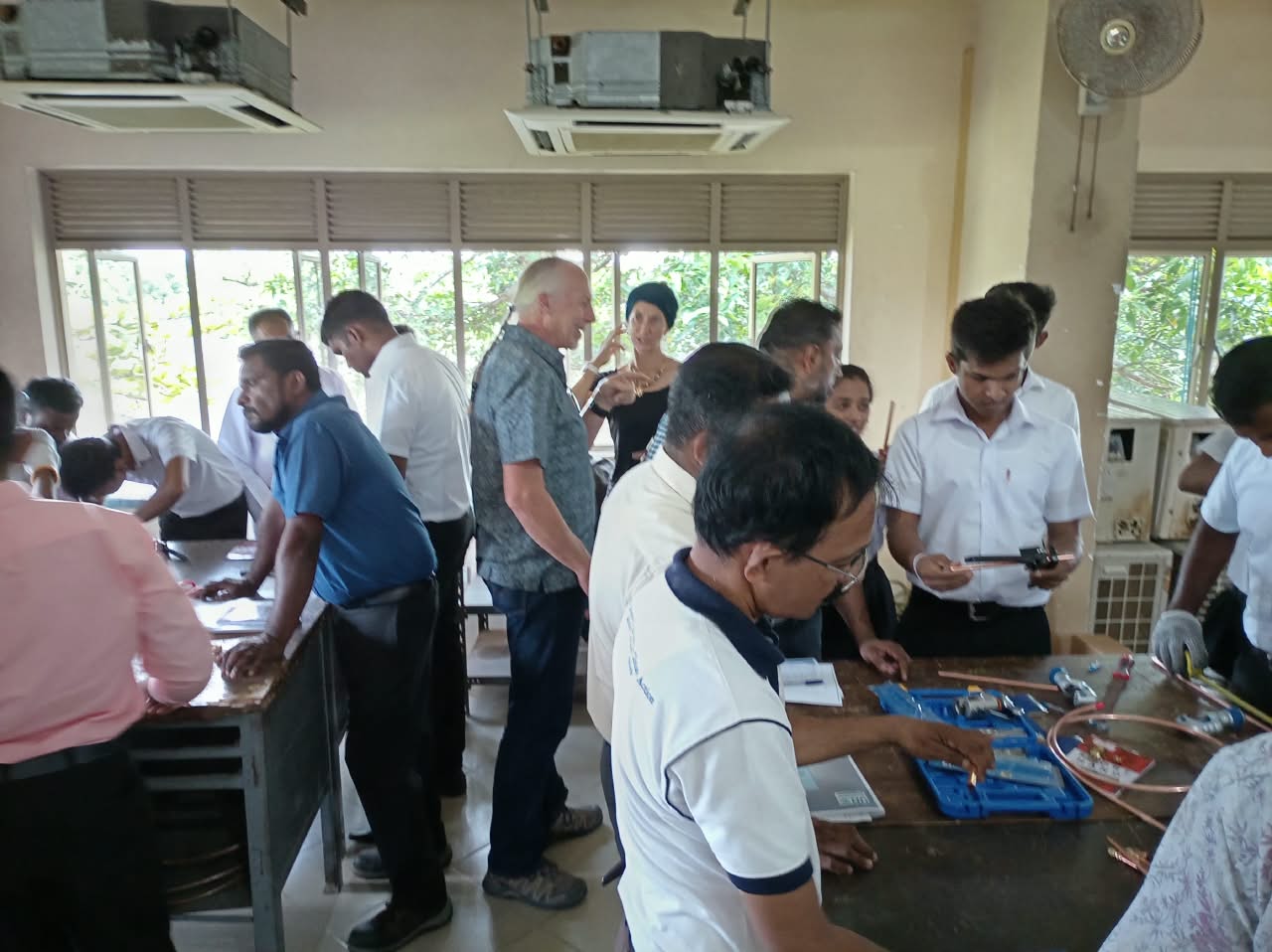
Sri Lanka is implementing the Kigali Amendment to the Montreal Protocol and is preparing plans to control the import and use of HFC chemicals as required by it. The country is also continuing to phase out substances that damage the ozone layer. This training workshop was organized to improve technical and vocational training and to make the assessment process more systematic in line with these changes. The training workshop was jointly organized by the National Ozone Unit of the Ministry of Environment and the United Nations Environment Programme (UNEP).
Its main objectives were:
- To update knowledge of new refrigerant technologies.
- To make the assessment process more systematic.
- To strengthen assessment under the National Vocational Qualification (NVQ) certification, so that skilled and licensed technicians can be produced.
Forty participants attended: 20 assessors from the refrigeration and air conditioning service sector across the island and 20 trainers from the Ceylon German Technical Training Institute (CGTTI). Mr. Michael Moller, a Refrigeration and Air Conditioning Trainer from UNEP, led the training on carrying out assessments based on set criteria.
The workshop was held at the Ceylon German Technical Training Institute in Ratmalana on 29th and 30th September and 1st and 2nd October 2026. It was an important step towards producing skilled technicians who can adapt to environmentally friendly refrigeration technologies, and towards raising the quality of vocational training.
Image Gallery